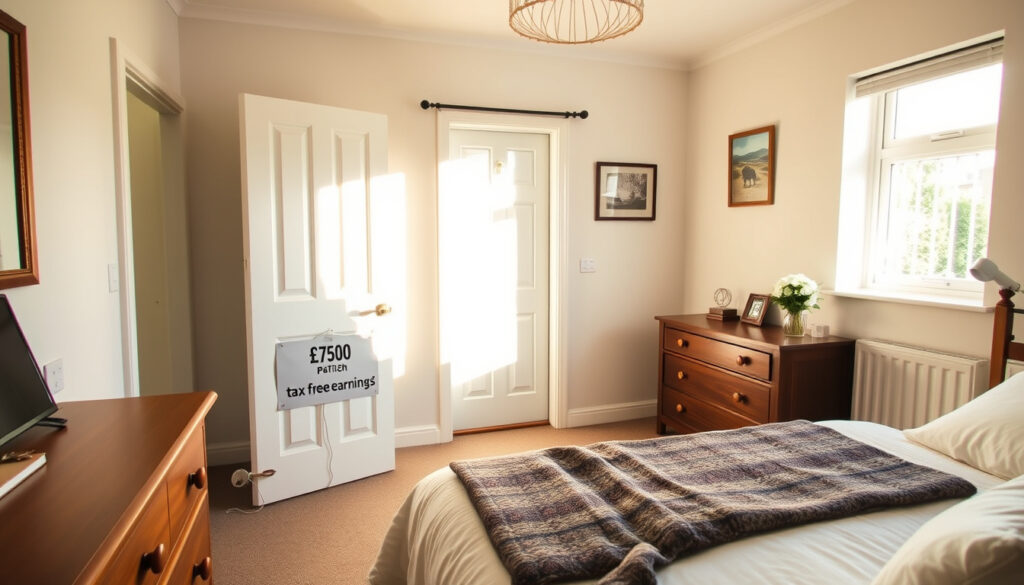
The Rent a Room Scheme offers UK residents a straightforward way to generate additional income without facing a tax bill. Introduced to encourage homeowners to make better use of their living spaces, the scheme permits individuals to earn a specified amount each tax year by renting out accommodation within their primary residence. This arrangement has become particularly relevant as housing costs continue to rise and more people explore ways to supplement their earnings.
Understanding how the scheme operates, including its eligibility requirements and the threshold for tax-free earnings, can help property owners make informed decisions about renting out space in their homes. The rules surrounding the scheme are relatively simple, but certain conditions must be met to qualify for the relief.
This guide explains the key aspects of the Rent a Room Scheme, from the maximum amount that can be earned tax-free to the steps involved when earnings exceed the specified limit. Official guidance from HMRC and GOV.UK forms the basis of the information provided throughout.
What is the Rent a Room Scheme?
The Rent a Room Scheme is a tax relief measure introduced by HM Revenue and Customs that allows individuals to earn income from renting furnished accommodation in their main home without paying tax on those earnings up to a specified threshold. The scheme applies to the tax year running from 6 April to 5 April the following year, and covers gross income received from rent, utilities, meals, or cleaning services provided to tenants.
The scheme remains unchanged for both the 2024/25 and 2025/26 tax years, providing consistency for those considering renting out space in their homes. According to official GOV.UK guidance, the relief applies automatically to eligible individuals whose gross rental income does not exceed the threshold.
- Earn up to £7,500 tax-free annually with no need to notify HMRC if below the threshold
- The £7,500 limit applies to gross income from all rooms combined, not per room
- Renting to family members is permitted provided the accommodation meets all other criteria
- The scheme is available across the entire United Kingdom, including Scotland
- Opting out allows you to deduct actual expenses, which may be beneficial if costs are high
- Airbnb and similar short-term lets can qualify if the property is your main furnished home
- No pre-registration is required before starting to rent out a room
| Fact | Details |
|---|---|
| Maximum Earnings | £7,500 tax-free (or £3,750 each if shared) |
| Home Requirement | Must be your main residence while renting |
| Accommodation Type | Furnished rooms used as living space |
| Reporting | None required if earnings are below threshold |
| Eligible Lettings | Rooms in your home, including short-term lets via Airbnb |
| Not Covered | Separate annexes, unfurnished spaces, holiday homes, or properties abroad |
How Much Can You Earn Tax-Free Under the Scheme?
The current tax-free threshold under the Rent a Room Scheme stands at £7,500 per tax year for individual earners. This amount represents gross rental income, meaning it includes not only rent payments but also any charges for utilities, meals, or cleaning services provided to tenants. If two individuals share the income, such as joint owners or partners, each threshold is halved to £3,750.
The threshold applies to combined earnings from any number of rooms rented within the property, rather than a per-room allowance. For example, if you rent out three rooms and collectively earn £6,000 in gross income, the entire amount falls within the tax-free limit. Similarly, short-term rental arrangements through platforms like Airbnb can count towards this total provided the accommodation is in your main home and meets the furnished requirement.
Calculating Your Potential Tax-Free Earnings
To determine whether your rental income falls within the tax-free allowance, add together all gross receipts from room rentals during the tax year. This figure should include rent payments and any additional charges passed on to tenants. If the total remains at or below £7,500, no tax is payable on that income. Full details on how rental income is assessed are available from HMRC’s detailed guidance.
The £7,500 threshold has remained unchanged since 2016 and applies to both the 2024/25 and 2025/26 tax years. No automatic inflation adjustments have been announced for future years.
What Counts as Gross Income
Gross income for the purposes of the scheme encompasses all payments made by tenants for the use of furnished accommodation. This includes the basic rental payment plus any supplementary charges for services such as breakfast, evening meals, laundry, or utilities. The total of these amounts, before any deductions, determines whether the threshold has been exceeded.
Who Qualifies for the Rent a Room Scheme?
Eligibility for the Rent a Room Scheme depends on meeting several specific conditions simultaneously. Understanding these requirements is essential before commencing any rental arrangement under the scheme, as failing to qualify could result in unexpected tax liabilities.
Primary Residence Requirement
The property in question must serve as your main home at the time you are renting out the accommodation. This means you must physically live there while receiving rental income from tenants or lodgers. Holiday homes, second properties, and rentals of properties located abroad do not qualify for the scheme, regardless of whether they are furnished or meet other criteria.
Furnished Accommodation Standard
All accommodation rented under the scheme must be furnished and suitable for use as living space. The furnished requirement means that the room or rooms should include appropriate furniture for the tenant’s use, including a bed, storage, and seating. Spaces used primarily for business purposes, storage, or that lack basic furnishings fall outside the scope of the scheme.
The requirement for furnished accommodation means rooms must contain appropriate furniture. A spare bedroom with a bed and storage qualifies, while an empty room or an office space would not.
Individual Status Requirement
The scheme applies exclusively to individual taxpayers, not to companies or partnerships. If you operate through a limited company structure, you cannot claim Rent a Room relief on those earnings. However, individuals who own property jointly or with a partner can each benefit from their own threshold when sharing income.
Renting to Family Members
There are no explicit restrictions preventing homeowners from renting rooms to family members under the scheme, provided the accommodation is in their main home and meets the furnished living space requirement. When income is shared between household members, such as with a spouse or co-owner, each person’s threshold is limited to £3,750.
Geographic Availability
The Rent a Room Scheme operates uniformly across the United Kingdom, including Scotland, Northern Ireland, and Wales. According to HMRC guidance available on GOV.UK, no regional variations exist in how the scheme is administered or which rules apply in different parts of the country.
What Happens If You Exceed the Rent a Room Threshold?
When gross rental income exceeds the £7,500 threshold, additional steps become necessary to ensure compliance with tax obligations. The scheme provides two distinct options for handling earnings above the limit, and the most advantageous choice depends on individual circumstances, particularly the level of expenses incurred.
Claiming Relief on Excess Income
The first option involves continuing to use the Rent a Room Scheme, which means tax is charged only on the amount exceeding £7,500. Under this approach, no deductible expenses can be claimed against rental income. This option tends to be beneficial when actual expenses are relatively low compared to the rental income received.
Opting Out of the Scheme
The second option allows you to opt out entirely and be taxed under standard property income rules. This means you can deduct allowable expenses such as repairs, insurance, utilities, and furnishings from your rental income before calculating tax. If your expenses are substantial, this approach may result in a lower overall tax bill. Further information on opting out and claiming actual expenses is available from HMRC.
To opt out of the scheme, you must inform HMRC by 31 January following the end of the relevant tax year. For the 2025/26 tax year, this deadline would be 31 January 2027.
Reporting Requirements
Earning above the threshold requires filing a Self Assessment tax return to report the rental income and either claim the scheme relief or opt out. The decision to claim or opt out persists until you actively change your election, so it is worth reviewing your circumstances each year if your rental income fluctuates.
Rent a Room Scheme vs Property Allowance: Key Differences
Two tax-free allowances exist for property income in the UK, and understanding the distinction between them is important for maximising tax efficiency. While both provide relief on rental earnings, they operate under different rules and have different thresholds. For those considering property investment, understanding the nuances of schemes like the Rent a Room Scheme is crucial, and you can find more information about it at $sites for sale in Cork.
| Option | Threshold | Expenses | Best For |
|---|---|---|---|
| Rent a Room Scheme | £7,500 gross | None deductible | Low-expense rentals near threshold |
| Property Allowance | £1,000 gross | Deductible if higher profit | Non-qualifying lets or high expenses |
| Opt Out (Actual Profit) | No fixed limit | Full deduction allowed | High-cost rentals exceeding £7,500 |
The Property Allowance provides a £1,000 tax-free threshold for gross property income from any UK property, separate from the Rent a Room Scheme. Unlike Rent a Room, this allowance allows you to deduct actual expenses if they result in higher profits. Both allowances cannot be claimed simultaneously on the same income.
When to Choose Each Option
The Rent a Room Scheme is most advantageous when rental expenses are modest and income approaches or exceeds the £7,500 threshold. The Property Allowance suits situations where the property does not qualify for Rent a Room, such as holiday lets or second homes, or where expenses are high enough that deducting them produces a better outcome than the fixed allowance.
Opting out of the Rent a Room Scheme becomes worthwhile when allowable expenses significantly exceed the benefits of the scheme, particularly if rental income is high but associated costs for furnishings, utilities, or repairs are substantial.
Key Milestones in the Scheme’s History
The Rent a Room Scheme has evolved since its introduction, with the tax-free threshold increasing over time to provide greater benefit to participants. These changes reflect the government’s ongoing support for homeowners seeking to utilise their property assets.
- 1997 — The scheme was introduced, initially set at £3,250 per tax year
- 2015 — The threshold was increased to £4,250 to reflect changing property market conditions
- 2016 — The current threshold of £7,500 was introduced, doubling the previous limit
- 2024–2025 — The threshold remains unchanged at £7,500 for both 2024/25 and 2025/26 tax years
What is Clear and What Remains Uncertain
| Established Information | Remaining Uncertainty |
|---|---|
| The £7,500 threshold applies to the 2024/25 and 2025/26 tax years | Whether future inflation adjustments will be made to the threshold |
| The scheme is UK-wide with identical rules across all regions | Potential policy changes beyond 2025/26 have not been announced |
| Gross income includes rent, utilities, meals, and cleaning charges | Specific treatment of occasional vs regular lets under review |
| Opting out requires notification to HMRC by 31 January | HMRC has not confirmed plans for digital notification systems |
Understanding the Purpose Behind the Scheme
The Rent a Room Scheme was created to address housing shortages in the private rental sector while providing homeowners with a means to supplement their income. By offering a generous tax-free threshold, the government encourages the supply of affordable accommodation without placing additional financial burden on those renting out spare rooms.
This policy approach recognises that many homeowners have underutilised space that could serve as viable accommodation. The simplicity of the scheme, with its automatic relief for earnings below the threshold and straightforward reporting requirements, makes it accessible to individuals without specialist tax knowledge.
The scheme also supports broader economic activity by enabling income that might otherwise go untaxed to be properly accounted for within the tax system. Participants benefit from tax-free earnings while contributing to housing availability, particularly in areas with high demand for rented accommodation.
Official Sources and Further Information
The most authoritative guidance on the Rent a Room Scheme is available directly from HM Revenue and Customs and the GOV.UK website. These sources provide definitive information on eligibility, reporting requirements, and any updates to the scheme’s operation.
“The Rent a Room Scheme lets you earn up to £7,500 each tax year tax-free by renting out furnished accommodation in your home.”
— HMRC, GOV.UK
For those requiring detailed technical guidance, HMRC publishes additional resources including the Employment Income Manual section on Rent a Room for Traders and the official guidance document HS253. These materials provide comprehensive information for individuals with more complex circumstances.
- HMRC GOV.UK: Rent a Room Scheme official guidance
- HMRC HS253: Rent a Room for Traders technical notes
- HMRC Employment Income Manual: EIM21600 detailed guidance
Summary: Key Points to Remember
The Rent a Room Scheme offers a valuable opportunity for homeowners to earn up to £7,500 tax-free each tax year by renting out furnished accommodation in their main residence. The threshold, which halves to £3,750 for shared income, has remained unchanged since 2016 and applies across the entire UK including Scotland. No registration is required to start, and earnings below the threshold require no reporting to HMRC.
For those whose earnings exceed the limit, options include claiming relief on the excess amount or opting out to deduct actual expenses under standard property income rules. The most beneficial approach depends on individual circumstances, particularly the level of expenses incurred. Related guidance on vehicle taxation in Ireland can be found through the Road Tax Calculator Ireland – Official 2025 Rates Guide and the Road Tax Calculator Ireland – Official Rates, Bands and Guide.
Frequently Asked Questions
Does the rent a room scheme apply to furnished rooms only?
Yes, all accommodation rented under the scheme must be furnished and used as living space. This means rooms should contain appropriate furniture such as a bed and storage. Unfurnished rooms, office spaces, and storage areas do not qualify for the relief.
Is the rent a room scheme available in Scotland?
Yes, the scheme applies UK-wide including Scotland. HMRC and GOV.UK guidance confirms that the same rules and thresholds apply regardless of which part of the United Kingdom the property is located in.
What expenses can I claim under the rent a room scheme?
If you claim Rent a Room relief, no expenses are deductible as the scheme applies to gross income. However, if you opt out of the scheme, you can deduct allowable expenses such as repairs, insurance, utilities, and furnishings under standard property income rules.
Do I need to register with HMRC before renting out a room?
No pre-registration is required. If your earnings stay below the £7,500 threshold, the relief applies automatically. You only need to file a Self Assessment tax return if your earnings exceed the threshold or if you choose to opt out of the scheme.
Can I rent to family members under the scheme?
There are no explicit restrictions on renting to family members. The accommodation must be in your main furnished home and meet the living space criteria. If income is shared with another household member, each threshold is limited to £3,750.
What happens if I use Airbnb for short-term lets?
Short-term lets through platforms like Airbnb can qualify for the scheme if the property is your main residence and the accommodation is furnished. All earnings from such lets count towards the £7,500 gross income threshold.
How do I opt out of the rent a room scheme?
To opt out, you must inform HMRC by 31 January following the end of the relevant tax year. This can be done through your Self Assessment tax return. Once opted out, you can deduct actual expenses from your rental income.