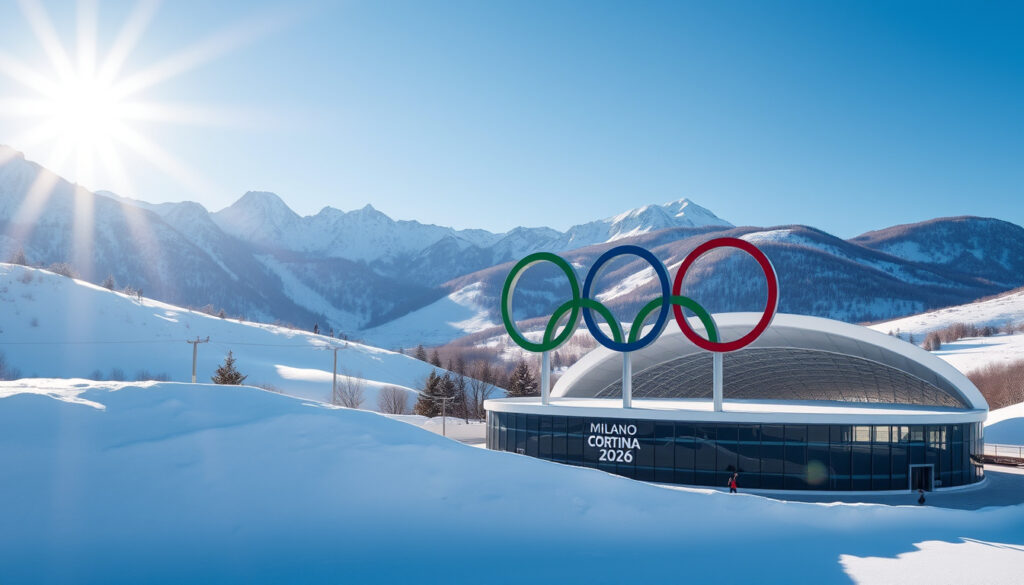
2026 Winter Olympics Milano Cortina: Dates & Guide
Italy’s Alps are about to host a Winter Games like no other — spread across Milan, Cortina d’Ampezzo, and several mountain valleys, the 2026 edition is built for sustainability and spectacle. With competitions beginning as early as February 4, here’s what you need to know about the dates, venues, and how to watch the Milano Cortina Winter Olympics.
Host Cities: Milan and Cortina d’Ampezzo, Italy · Dates: February 6–22, 2026 · Disciplines: 16 Olympic disciplines · Athletes: ≈2,900 from 93 nations · Paralympics Dates: March 6–15, 2026
Quick snapshot
- Host cities: Milan and Cortina d’Ampezzo, Italy (Wikipedia (encyclopedic source))
- Olympic dates: February 6–22, 2026 (NBCUniversal (official broadcaster))
- Exclusion of national teams from Russia and Belarus (Olympics.com (IOC governing body))
- Paralympic dates: March 6–15, 2026 (NBC Olympics (U.S. rights holder))
- Host of the 2030 Winter Olympics – not yet selected by the IOC (Wikipedia (background))
- Final list of neutral athletes from Russia and Belarus – IOC decision pending (Olympics.com (IOC governance))
- Detailed ticketing pricing – official information forthcoming (Olympics.com (official site))
- June 24, 2019 – IOC awards Games to Milan-Cortina (Olympics.com (IOC announcement))
- February 6, 2026 – Opening Ceremony (NBCUniversal (official schedule))
- Final athlete qualification ends early 2026 (NBC Olympics (sports guide))
- Detailed broadcast schedules release 2–3 months before Games (Olympics.com (media rights))
- Ticket sales phase 2 opens late 2025 (Olympics.com (ticketing))
Italy is betting that a distributed Games across existing venues in Lombardy, Veneto, and Trentino will keep costs down while showcasing the Alps. But the sprawling layout means athletes and fans face longer travel between sites than in a compact host city.
Eight key facts, one pattern: the 2026 Games are designed to minimize new construction by clustering events around existing winter sports infrastructure.
| Label | Value |
|---|---|
| Official Name | XXV Olympic Winter Games Milano Cortina 2026 |
| Host Country | Italy |
| Dates (Olympics) | February 6–22, 2026 |
| Dates (Paralympics) | March 6–15, 2026 |
| Number of Sports | 16 |
| Estimated Athletes | 2,900+ |
| Participating Countries | 93 |
| Awarded Date | June 24, 2019 |
Where are the 2026 Winter Olympics and future Olympic Games?
Milano Cortina 2026 Venues
- The Games are staged across multiple sites in Lombardy, Veneto, and Trentino-Alto Adige/Südtirol (Olympics.com (venue overview)).
- Milan will host ice sports (figure skating, speed skating, ice hockey) and the Opening Ceremony at the renovated San Siro area (Olympics.com (venue overview)).
- Cortina d’Ampezzo handles Alpine skiing, bobsleigh, and skeleton, while Val di Fiemme and other valleys cover Nordic events (Wikipedia (event locations)).
2030 Winter Olympics Host
- The host for the 2030 Winter Olympics has not yet been selected by the IOC as of early 2025 (Olympics.com (IOC announcements)).
- Switzerland, Sweden, and France have expressed interest, but no official bid has been approved (Wikipedia (future Games speculation)).
2028 and 2032 Olympic Hosts
- The 2028 Summer Olympics will be in Los Angeles, USA; the 2032 Summer Olympics in Brisbane, Australia (Wikipedia (future Summer Games)).
- There are no Winter Olympics in those years.
Bottom line: Milano Cortina 2026 is a cluster of historic winter hubs rather than a single-city Games. For travelers planning a visit, the key implication is logistical: expect to move between valleys, not just neighborhoods.
When do the 2026 Winter Olympics start?
Opening Ceremony
- The Opening Ceremony takes place on February 6, 2026 (NBCUniversal (official schedule)).
- NBC broadcasts live coverage beginning at 2 p.m. ET (NBCUniversal (broadcast details)).
Competition Schedule
- Competition actually begins two days before the Opening Ceremony, on February 4, 2026, with curling mixed doubles round-robin matches (NBC Olympics (schedule preview)).
- The first gold medals are awarded on February 7, 2026 (PBS NewsHour (independent journalism)).
- The Closing Ceremony is on February 22, 2026 (NBC Olympics (event dates)).
Paralympic Dates
- The 2026 Winter Paralympics run from March 6 to March 15, 2026 (NBC Olympics (Paralympic schedule)).
Where to watch the 2026 Winter Olympics?
Official Broadcasters by Country
- In the United States, NBCUniversal holds broadcasting rights across NBC, Peacock, and USA Network (NBCUniversal (official broadcaster)).
- In Spain, RTVE is the official broadcaster (Olympics.com (media rights holders list)).
- Claro Sports covers Latin America (except Brazil and Cuba) (Streamscharts (media analysis)).
Streaming Options
- Peacock will stream every event live in the U.S. (NBCUniversal (streaming details)).
- DAZN may offer streaming in select markets, though exact availability is not confirmed (Olympics.com (rights holders list)).
- Age of Sports holds YouTube broadcasting rights for parts of Asia, including Singapore, Malaysia, and the Philippines (Streamscharts (regional rights)).
Coverage in the US and Spain
- NBC primetime coverage begins at 8 p.m. ET (NBCUniversal (primetime)).
- RTVE will broadcast across its main channel and streaming platform RTVE Play (Olympics.com (rights holders)).
Bottom line: Live coverage is abundant, but cord-cutters in the U.S. need Peacock for full access; international viewers should check local rights holders. Spanish fans get free-to-air coverage via RTVE, while Latin American viewers rely on Claro Sports.
Which countries are excluded from the 2026 Winter Olympics?
Russia and Belarus Ban
- National teams from Russia and Belarus are excluded from the 2026 Winter Olympics due to the ongoing war in Ukraine (Olympics.com (IOC official statement)).
Neutral Athletes
- The IOC has allowed individual neutral athletes with a clean background to compete under certain conditions, but national teams from both countries are banned (Olympics.com (IOC neutrality rules)).
- The final list of approved neutral athletes is expected closer to the Games, as the IOC evaluates each case (Wikipedia (participation details)).
For Russian and Belarusian athletes with Olympic dreams, the path to Milano Cortina is narrow: compete as an individual with no flag, no anthem, and a background check. The geopolitical shadow over these Games is the deepest since the Cold War boycotts.
The pattern: only individual athletes with clean records may compete, and the final eligibility list remains pending IOC review.
Which was the only city that rejected the Olympics?
History of Olympic Host City Selection
- Denver, Colorado, remains the only city to have formally turned down the Olympics after being awarded them (Wikipedia (historical host cities)).
- The 1976 Winter Olympics were originally awarded to Denver but moved to Innsbruck, Austria after a public referendum rejected the Games (Wikipedia (Denver withdrawal)).
The Denver Case (1976 Winter Olympics)
- Denver voters passed the “Olympic Rejection Amendment” in 1972, citing environmental and financial concerns (Wikipedia (1976 referendum)).
- The case is often cited in debates about the cost and social impact of hosting mega-events.
Bottom line: Milano Cortina 2026 deliberately avoided Denver’s fate by using existing venues and limiting new construction. The formula — reuse, don’t build — is the Games’ best defense against the kind of voter backlash that killed Denver’s bid.
Timeline: Milano Cortina 2026 – Key Dates
- June 24, 2019: IOC awards the 2026 Winter Olympics to Milan and Cortina d’Ampezzo (Olympics.com (IOC announcement)).
- February 4, 2026: Competition begins (curling mixed doubles) (NBC Olympics (schedule)).
- February 6, 2026: Opening Ceremony (NBCUniversal (official date)).
- February 6–22, 2026: Olympic competition period (NBCUniversal (duration)).
- February 22, 2026: Closing Ceremony (NBC Olympics (closing)).
- March 6–15, 2026: 2026 Winter Paralympics (NBC Olympics (Paralympic dates)).
The pattern: all key milestones are locked in, with the earliest competition start on February 4.
What we know and what’s still unclear
Confirmed facts
- Host city: Milan and Cortina d’Ampezzo, Italy (Wikipedia (encyclopedic source)).
- Olympic dates: February 6–22, 2026 (NBCUniversal (official schedule)).
- Paralympic dates: March 6–15, 2026 (NBC Olympics (Paralympic schedule)).
- Exclusion of national teams from Russia and Belarus (Olympics.com (IOC governing body)).
- NBC and Peacock are primary U.S. platforms (NBCUniversal (official broadcaster)).
What’s unclear
- Host of the 2030 Winter Olympics – not yet selected by the IOC (Wikipedia (background)).
- Final list of individual neutral athletes from Russia and Belarus – IOC will decide closer to the Games (Olympics.com (IOC governance)).
- Detailed ticketing procedures and pricing – official information pending (Olympics.com (ticketing)).
- Full-spectator policy across all venues – though subject to change (NBC Olympics (venue policy)).
- Exact budget figures – official confirmation pending (Wikipedia (budget)).
Quotes on the 2026 Winter Games
“The IOC has taken a clear stance: national teams from Russia and Belarus are not welcome at Milano Cortina 2026. Individual athletes with a clean record may compete under a neutral flag, but the door is closed to state-sponsored delegations.”
— IOC President Thomas Bach, as reported by Olympics.com (IOC official statements)
“Milano Cortina 2026 will be a distributed Games, using existing venues across the Italian Alps to minimize environmental impact and construction costs.”
— Official description from Olympics.com (Games overview)
“The 2026 Winter Olympics represent a return to Europe’s winter sports heartland, with Italy hosting for the first time since Turin 2006.”
— Analysis from Wikipedia (historical context)
The common thread: these Games aim to combine sustainability with a return to traditional Alpine venues, while navigating the geopolitical fallout from the war in Ukraine.
Summary: What Milano Cortina 2026 means for fans
For the millions of viewers worldwide who will tune in, the 2026 Winter Olympics offer a unique spectacle: a Games spread across the Italian Alps, with every event within a few hours’ drive of the others. The catch is that fans must plan their travel carefully — a day might start with cross-country skiing in Val di Fiemme and end with ice hockey in Milan. For the infrequent traveler, the smart move is to pick one cluster (either the mountain zone or Milan) and stick with it, or risk spending more time on mountain roads than watching sports.
Related reading: **England National Football Team Games 2026: Fixtures, TV & Squad** · **England v New Zealand 2026: TV channel, kick-off time, and history**
For a detailed breakdown of every event, check the full schedule and results for Milano Cortina 2026.
Frequently asked questions
How many sports are in the 2026 Winter Olympics?
16 disciplines are scheduled, including Alpine skiing, biathlon, bobsleigh, curling, figure skating, ice hockey, and others (Wikipedia (sports list)).
What new events are introduced for Milano Cortina 2026?
No entirely new sports were added for 2026, but some events have been adjusted to improve gender balance. Ski jumping and Nordic combined continue as mixed-gender events (NBC Olympics (event changes)).
What is the mascot of the 2026 Winter Olympics?
The official mascot is “Tina” and “Milo” – two anthropomorphic alpine creatures inspired by the host cities Cortina and Milan (Wikipedia (mascot info)).
How can I buy tickets for the 2026 Winter Games?
Ticket sales are handled through the official Olympics website. A second phase of sales is expected in late 2025. Prices have not been fully announced (Olympics.com (ticketing)).
Will spectators be allowed at all venues?
Yes, full-spectator events are planned across all venues, with no capacity restrictions announced as of early 2025 (NBC Olympics (venue policy)).
What is the estimated budget for Milano Cortina 2026?
The official budget is approximately €1.5 billion, focused on upgrading existing infrastructure rather than building new permanent venues (Wikipedia (budget)).
Are there any environmental sustainability initiatives for these Games?
Yes, the organizing committee has pledged to use 100% renewable energy for all venues and to offset remaining carbon emissions through reforestation projects in the Alps (Olympics.com (sustainability plan)).
The takeaway: the answers reflect a Games designed for accessibility and environmental responsibility, though some key details (ticket prices, neutral athlete list) remain unresolved.
More related posts
 What Age Is Priscilla Presley? Her Biography & Life
 MVPWIN555 Slot: Spinning, Baccarat, Deposit & Withdraw
 Last Minute World Book Day Costumes: 10 Easy DIY Ideas
 Working Family Payment Rates 2026: Income Limits & Calculator
 Bologna FC vs Celtic F.C. Lineups: Confirmed XI & Subs
 Hook and Ladder Waterford Menu, Hours, and Reviews
 Best Comic Book Stores in Dublin: City Centre Guide & Comparison
 Signs of Kidney Infection: Symptoms vs UTI & When to Act