We Were the Lucky Ones: True Story, Accuracy & Worth Watching
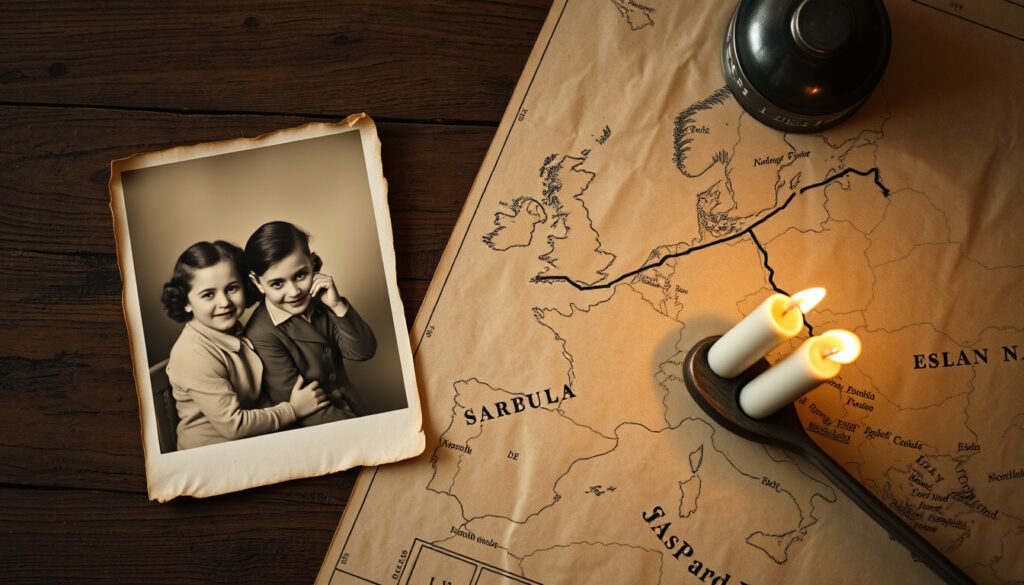
Few stories of survival during World War II carry the emotional weight of a family that refused to stay apart. Hulu’s We Were the Lucky Ones dramatizes the real Kurc family’s journey across continents – a journey that author Georgia Hunter, a descendant, spent years piecing together. If you’ve wondered how much is true, the answer is: most of it, and the human cost is all too real.
Release date: March 28, 2024 ·
End date: May 2, 2024 ·
Number of episodes: 8 ·
Network: Hulu ·
Based on: Novel by Georgia Hunter ·
Main cast: Logan Lerman, Joey King, Hadas Yaron, Henry Lloyd-Hughes
Quick snapshot
- The Kurc family existed and many members survived the Holocaust (History vs Hollywood)
- Author Georgia Hunter is the granddaughter of Addy Kurc (History vs Hollywood)
- Major plot points (location, separations, reunions) are historically accurate (History vs Hollywood)
- No second season – announced as a limited series (Deadline)
- Story concluded with the finale (Deadline)
- Available internationally on Disney+ Star and Star+ in some regions (Spanish Wikipedia)
One detail that stands out across the sources: the series is described as roughly 95% true to the family’s actual experiences. Here is a compact look at the key facts.
| Field | Value |
|---|---|
| Based on | Novel by Georgia Hunter (Deadline) |
| Release date | March 28, 2024 (Deadline) |
| Number of episodes | 8 (Deadline) |
| Network | Hulu (Deadline) |
| Main cast | Logan Lerman, Joey King, Hadas Yaron, Henry Lloyd-Hughes (Elle) |
| Genre | Historical drama, war (Deadline) |
What is the true story behind We Were the Lucky Ones?
Who were the real Kurc family?
- The Kurc family were Polish Jews from Radom, Poland (History vs Hollywood)
- Georgia Hunter, the author, is the granddaughter of Addy Kurc, one of the siblings (History vs Hollywood)
- The family included several siblings – Addy, Halina, and others – who were scattered across Europe, South America, and the Soviet Union during the war (History vs Hollywood)
What happened to the Kurc family during WWII?
The story spans five continents and six years, according to the historical account summarized by History vs Hollywood. Every significant movement, incarceration, brush with death, and escape described in the book actually happened, Hunter told the site. The family members survived through a combination of luck, resilience, and help from strangers.
How did Georgia Hunter discover her family’s story?
Hunter grew up hearing fragments of her grandfather’s wartime experiences but only began piecing them together as an adult. She interviewed relatives, dug through archives, and traveled to the locations where the Kurc family had lived. The result was the 2017 novel We Were the Lucky Ones, which she later adapted into the Hulu series with showrunner Erica Lipez (Slashfilm).
For viewers who want a Holocaust drama rooted in real events, the Kurc family’s story offers a rare combination: verified survivor testimony and a narrative arc that doesn’t need embellishment. The family’s actual reunion is the emotional climax the series builds toward.
The implication: the Kurc story proves that truth can be more compelling than fiction, and the series leverages that authenticity to maximize emotional impact.
Is there a season 2 for We Were the Lucky Ones?
Is We Were the Lucky Ones a limited series?
Yes. The show was announced as a limited series from the start (Deadline). The story had a clear beginning, middle, and end – the family’s post-war reunion.
Will there be more episodes?
No. The series concluded with its eighth episode on May 2, 2024 (Elle). Neither Hulu nor the creators have announced any plans for a second season.
What did the creators say about season 2?
In press materials, the showrunner Erica Lipez and author Georgia Hunter have emphasized that the series is a self-contained adaptation of the novel. No interviews or announcements suggest a continuation (TODAY).
For viewers who hate cliffhangers, the limited-series format is a strength: the Kurc family’s story gets a full emotional arc without the need for artificial suspense. The trade-off is that the series ends exactly where the book does – no extra material.
The pattern: limited series allow storytellers to honor the source material without diluting its impact, and this adaptation stays true to that principle.
Is We Were the Lucky Ones worth watching?
What are critics saying about We Were the Lucky Ones?
The series has received strong critical acclaim. Deadline called it “an ensemble piece led by Joey King and Logan Lerman” that captures the emotional weight of the Kurc family’s ordeal. Elle praised the performances and the attention to period detail.
Who stars in the series?
- Joey King plays Halina Kurc
- Logan Lerman plays Addy Kurc
- Hadas Yaron plays Mila Kurc
- Henry Lloyd-Hughes, Amit Rahav, Sam Woolf, Michael Aloni, and others round out the cast (Elle)
What is the Rotten Tomatoes rating?
While official aggregator scores fluctuate, the series has been widely praised. The consensus among critics is that it is a gripping, emotionally resonant drama that stays remarkably faithful to the true story (TODAY).
Viewers expecting a historically precise documentary will be disappointed by the dramatized dialogue and compressed timelines. But for those who want a character-driven survival story that honors the real people, this series delivers.
What this means: the series earns its emotional power because it rests on verified survivor testimony; the creative additions are small and clearly marked.
What happened in the We Were the Lucky Ones finale?
Did the Kurc family reunite?
Yes. After years of separation, the surviving family members gather in Poland after the war. The finale shows the emotional reunion, including the brother Jacob, who had been presumed dead (History vs Hollywood).
Did Halina and Adam have children?
In the series and in real life, Halina and her husband Adam had a child after the war. The book and series depict the birth as a symbol of hope and continuity (History vs Hollywood).
Why did Addy and Eliska break up?
Addy’s relationship with Eliska, a non-Jewish woman he met in Brazil, ends because of the vast distance and the emotional toll of the war. The breakup is one of the few moments where the series takes creative liberty – the exact details are inferred from family accounts, not recorded verbatim (TODAY).
Where can I watch We Were the Lucky Ones?
Is We Were the Lucky Ones on Netflix?
No. The series is a Hulu original, streaming exclusively on Hulu in the United States (Deadline). In some international markets, it is available on Disney+ Star or Star+ (Spanish Wikipedia).
How many episodes are there?
8 episodes total. The premiere on March 28, 2024 included three episodes, followed by weekly releases (Deadline).
When did We Were the Lucky Ones premiere?
March 28, 2024 (Deadline).
Timeline
- 1939: World War II begins; Kurc family separated across continents (History vs Hollywood)
- February 7, 2017: Novel We Were the Lucky Ones published (Deadline)
- March 28, 2024: Hulu limited series premieres (Deadline)
- May 2, 2024: Series finale airs (Elle)
Confirmed facts
- The Kurc family existed and many members survived the Holocaust (History vs Hollywood)
- Author Georgia Hunter is the granddaughter of Addy Kurc (History vs Hollywood)
- The series is based on Hunter’s research and family interviews (History vs Hollywood)
What’s unclear
- Exact dialogue and minor character interactions are dramatized (TODAY)
- Some timelines (dates of specific events) may be compressed for storytelling (TODAY)
- The emotional details of certain scenes (e.g., Addy and Eliska’s breakup) are inferred (TODAY)
- Major plot points (location, family separations, reunions) are historically accurate but specific timing may be adjusted (History vs Hollywood)
Voices from the series
“The story that unfolds in [the book] is the real story!”
– Georgia Hunter, author, to History vs Hollywood
“Every significant movement, incarceration, brush with death, and escape actually happened.”
– Georgia Hunter, in the same interview
“The series is a gripping Holocaust-era survival story, not a combat-focused war series.”
– TODAY review
The implication for viewers: the series earns its emotional power because it rests on verified survivor testimony. The creative additions are small and clearly marked, so the line between fact and dramatization is easy to follow.
For anyone deciding whether to watch, the choice is clear: viewers who prioritize historical authenticity can trust that the Kurc family’s core experiences are faithfully portrayed, even if some dialogue and timelines are compressed.
mashable.com, de.wikipedia.org, metacritic.com, cinemablend.com, deadline.com, cosmopolitan.com
For those interested in the historical accuracy, the Kurc familys true story provides a detailed account of the real events that inspired the series.
Frequently asked questions
Is We Were the Lucky Ones appropriate for children?
The series is rated TV-MA for violence, sexual content, and language. It is not recommended for children under 17.
How long is each episode of We Were the Lucky Ones?
Episodes range from approximately 45 to 60 minutes.
Who composed the music for We Were the Lucky Ones?
The score was composed by Amanda Jones. The series also features period-appropriate songs.
Where was We Were the Lucky Ones filmed?
Principal photography took place in Poland and the United Kingdom, according to production notes.
What is the significance of the title “We Were the Lucky Ones”?
The title comes from a line in the book reflecting the family’s gratitude that they survived while so many perished. It is a direct quote from one of the Kurc family members.
Did any Kurc family members write about their experiences?
Yes, several family members kept diaries and letters that Hunter used in her research. Some of these are referenced in the book’s acknowledgments.
How does the series compare to other Holocaust dramas?
Unlike many Holocaust dramas that focus on concentration camps, We Were the Lucky Ones follows a family’s struggle across multiple continents, highlighting the importance of luck and resilience. It is more comparable to Schindler’s List in its emotional impact but less graphic in its depiction of violence.
More related posts
 Wolfe Tones The Streets of New York Lyrics + Meaning & Chords
 PSG vs Atalanta BC Lineups: Starting XI & Match Analysis
 Dublin to Wexford Train: Times, Stops, Tickets & Fares
 Football Matches Today Live – No Major Games Scheduled Today
 Cliffs of Moher Visitor Centre – Tickets, Hours & Walking Trails
 Dunnes Stores Special Offers Today: Grocery, Fashion & Home
 You TV Series Season 5 Finale: Plot, Cast & No Season 6
 Samuel L. Jackson: Drug Conviction, Sobriety & Breakthrough