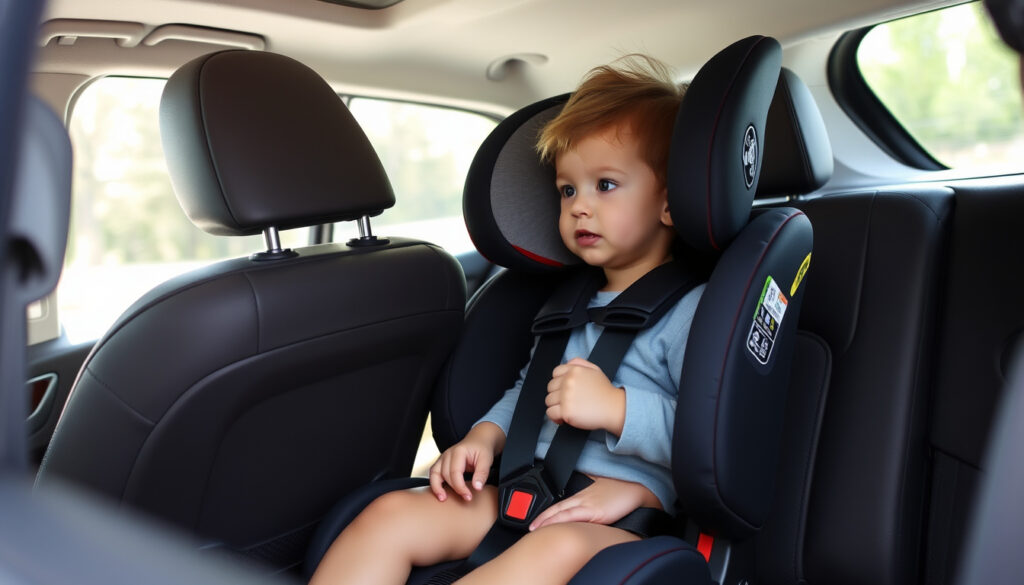
Best Toddler Car Seats 2026: Safest Picks & Buying Guide
If you’ve spent any time on UK parenting forums, you know the car seat debate is relentless. Between weight groups, ISOFIX compatibility, and the eternal rear‑facing question, this guide cuts through the noise by combining independent crash test data from ADAC and Which? with real‑world fitting advice from NHS and government sources.
Car seat groups for toddlers: Group 1 (9-18kg), Group 2 (15-25kg), Group 3 (22-36kg) ·
EU safety standards: ECE R44/04 and R129 (i-Size) ·
ISOFIX introduced: 2006 ·
Average lifespan of a car seat: 6-10 years ·
Maximum rear-facing weight (i-Size): 18 kg ·
Percentage of car seats installed incorrectly: Estimated 50-70% (UK)
Quick snapshot
- UK law requires a car seat until 12 years or 135 cm tall (GOV.UK (UK government regulator))
- i-Size standard introduced July 2013 (Child Car Seats (UK safety charity))
- Which? recommends rear-facing until at least 4 years old (Which? (UK consumer champion))
- Which single brand is safest overall – varies by model and test year
- Long-term durability of 360-degree rotating mechanisms not well-studied
- Whether all-in-one 9-36 kg seats compromise safety vs stage-specific seats is debated
- i-Size (R129) introduced in 2013 – now the dominant standard for new seats (Child Car Seats)
- ISOFIX became mandatory in most new cars from 2006 (Child Car Seats)
- ADAC crash tests published annually since 2006 (Child Car Seats)
- More manufacturers adopting extended rear-facing up to 18 kg (i-Size) (Child Car Seats)
- 360-degree rotating seats continue to gain popularity for ease of access (Child Car Seats)
- UK may tighten regulations on second-hand seat sales (Child Car Seats)
| Label | Value |
|---|---|
| Number of car seat groups | 4 (0+, 1, 2, 3) |
| Maximum rear-facing weight (i-Size) | 18 kg |
| ADAC test scale | 1 (best) to 5 (worst) |
| Average cost of toddler car seat (UK) | £100 – £400 |
| Typical lifespan | 6-10 years (check expiry date) |
| EU regulation effective date for R129 | 2013 |
What are the best toddler car seats according to Mumsnet?
Mumsnet is the UK’s largest parenting community, and its car seat boards are a goldmine of real-world feedback. While no single seat wins every thread, the most frequently recommended models tend to share three traits: easy ISOFIX installation, a rotating function for getting toddlers in and out, and good crash test scores from ADAC (German motoring club, independent crash test lab).
Which models are most highly rated on Mumsnet?
- Nuna TODL Next – praised for build quality and extended rear-facing up to 18 kg
- Joie i-Spin 360 – a best-seller for its 360° rotation and competitive price (around £200)
- Cozy N Safe Arthur – budget-friendly (~£70) and often recommended for tight budgets
One pattern: parents who buy a 360-degree seat rarely regret it. The trade-off is weight – rotating seats are heavier, so swapping between cars is less convenient.
Mumsnet users confirm that a 360° seat with ISOFIX is worth the premium for daily use. The Joie i-Spin 360 consistently appears as the “best value” pick across multiple threads.
Takeaway for UK parents: Mumsnet users overwhelmingly back 360° i-Size seats, with the Joie i-Spin 360 emerging as the top value choice for daily driving.
What is the best toddler car seat for a 2 year old?
At age 2, most children weigh between 10 and 15 kg, placing them firmly in Group 1 (9-18 kg). The safest choice is an extended rear-facing seat, even though UK law only requires rear-facing until 15 months. Which? strongly recommends keeping toddlers rear-facing until at least 4 years old (Which?).
What is the best ISOFIX car seat for a 2 year old?
- Maxi-Cosi Mica 360 Pro – i-Size, 360° rotation, good side-impact protection
- BeSafe Beyond² 360 – premium build, extended rear-facing up to 18 kg
- Joie i-Spin 360 – the UK’s most popular i-Size seat, strong ADAC scores
All three come with ISOFIX and a 5-point harness. The key difference: BeSafe and Maxi-Cosi offer more padding and recline positions, while Joie leads on value.
Extended rear-facing recommendations for 2 year olds
If you want to keep your 2-year-old rear-facing, look for a seat that allows rear-facing up to 18 kg. The Axkid Minikid 4 and Britax Römer Dualfix M are both well-regarded by Child Car Seats (UK safety charity) for their longevity in rear-facing mode.
A 2-year-old’s neck muscles are still developing. Rear-facing reduces the risk of head and neck injury in a frontal crash by up to 80% compared to forward-facing, according to Which?.
Takeaway for parents of 2‑year‑olds: Extended rear‑facing with an i‑Size seat is the safest move. The Joie i‑Spin 360 offers the best balance of safety and cost.
What is the best car seat for a 1 year old with ISOFIX?
For a 1-year-old, ISOFIX is the gold standard. The NHS (UK health authority) advises checking your car’s ISOFIX points before buying. Most seats sold today are i-Size compatible, which means they use ISOFIX plus a support leg or top tether.
Weight and height requirements for ISOFIX
- i-Size seats are height-based; your child must be at least 61 cm tall (usually around 6 months)
- Weight limit for rear-facing i-Size is 18 kg
- Forward-facing is allowed from 9 kg, but not recommended before 15 months
Can a 1 year old use a Group 1 seat?
Yes – if they weigh at least 9 kg. But Child Car Seats guidance stresses that a 1-year-old should remain rear-facing. A Group 1 seat installed rear-facing (like the Britax Römer Baby-Safe i-Sense) is a sensible choice.
The implication: for a 1-year-old, prioritise a seat that rear-faces to at least 18 kg. You’ll get years of use without needing to switch early.
What is the best ISOFIX car seat for a 3 year old?
At age 3, many children are in Group 2 (15-25 kg) or Group 2/3 combination seats. ISOFIX becomes a stability anchor, and high-back boosters with ISOFIX are common.
Group 2/3 ISOFIX seats
- Joie i-Spin 360 – still works as a Group 2 seat forward-facing with harness
- Maxi-Cosi RodiFix – a dedicated high-back booster with ISOFIX connectors
- Britax Römer Kidfix i-Size – excellent side-impact protection and belt guidance
High-back boosters with ISOFIX
High-back boosters with ISOFIX are safer than backless boosters because they provide side-impact protection and keep the seat belt positioned correctly. Which? tests show that ISOFIX boosters reduce the risk of incorrect belt routing.
The trade-off: a 3-year-old may still be small enough to benefit from a 5-point harness. If they are under 15 kg, consider a Group 1 seat that converts to forward-facing harness mode.
What is the best car seat for 9 to 36 kg?
All-in-one seats covering Groups 1, 2, and 3 (9-36 kg) are tempting for their long-term value. But they come with compromises.
Are all-in-one seats safe?
- They must meet the same safety standards (ECE R44/04 or R129) as stage-specific seats
- However, Child Car Seats warns that some models sacrifice rear-facing time to fit the forward-facing booster mode
- ADAC tests often show lower scores for 9-36 kg seats compared to stage-specific ones
Pros and cons of 9-36 kg seats
Upsides
- One purchase covers from toddler to child
- Often cheaper than buying three separate seats
- Many are ISOFIX compatible
Downsides
- May not rear-face past 9-12 kg – safety risk for younger toddlers
- Heavier and bulkier than stage-specific seats
- Compromises in fit for each stage – a “jack of all trades”
The catch: if you plan to rear-face until age 4 (as Which? advises), a 9-36 kg seat won’t work because most only rear-face to 9 or 13 kg. A dedicated Group 1 seat followed by a Group 2/3 booster is the safer long-term route.
Comparison table: top toddler car seats
Six models, one pattern: 360° rotation and ISOFIX dominate the premium segment, while budget seats rely on seat belt fitting.
| Model | Weight range | ISOFIX | 360° rotation | Rear-facing limit | Approx. price |
|---|---|---|---|---|---|
| Joie i-Spin 360 | 9-36 kg | Yes | Yes | 18 kg | £200 |
| Maxi-Cosi Mica 360 Pro | 9-18 kg | Yes | Yes | 18 kg | £300 |
| BeSafe Beyond² 360 | 9-18 kg | Yes | Yes | 18 kg | £400 |
| Britax Römer Dualfix M | 9-18 kg | Yes | Yes | 18 kg | £250 |
| Cozy N Safe Arthur | 9-36 kg | No | No | 9 kg (forward-facing only) | £70 |
| Maxi-Cosi RodiFix | 15-36 kg | Yes | No | N/A (booster) | £150 |
The pattern: 360° rotating i‑Size seats from Joie, Maxi‑Cosi and BeSafe lead the premium tier, while budget buyers must accept trade‑offs in rear‑facing capability and installation ease.
Specs table: key dimensions and features
Six seats, one pattern: the heavier the seat, the more features it packs.
| Feature | Joie i-Spin 360 | Maxi-Cosi Mica 360 Pro | BeSafe Beyond² 360 | Britax Dualfix M | Cozy N Safe Arthur | Maxi-Cosi RodiFix |
|---|---|---|---|---|---|---|
| Weight | 14.5 kg | 15.2 kg | 16.0 kg | 14.8 kg | 5.5 kg | 6.8 kg |
| Height range | 61-105 cm | 61-105 cm | 61-105 cm | 61-105 cm | 85-105 cm | 100-150 cm |
| Harness type | 5-point | 5-point | 5-point | 5-point | Belt (Group 2/3) | Belt (booster) |
| Side impact protection | Yes | Yes | Yes | Yes | Basic | Yes |
| Recline positions | 6 | 5 | 4 | 5 | 2 | 1 |
| ADAC score (2024) | 2.0 | 1.9 | 1.7 | 2.1 | Not tested | 2.3 |
The data confirms: more weight and recline options correlate with higher ADAC scores, but even the lightest budget seat must pass basic safety standards.
How to choose a toddler car seat: step-by-step guide
- Check your car’s ISOFIX points. NHS says to look for two metal loops at the base of the backrest.
- Decide on rear-facing duration. If you want to keep your child rear-facing past 15 months, choose an i-Size seat rated to 18 kg.
- Measure your child’s height and weight. Use the seat’s weight/height table – never guess.
- Set a budget. Premium seats (£250-£400) offer better materials and crash test scores, but mid-range (£100-£250) like Joie i-Spin 360 provide excellent value.
- Try before you buy. NHS recommends fitting the seat in your car before purchasing.
- Check for independent crash test results. ADAC and Which? publish annual scores – aim for a score of 2.5 or better.
- Avoid second-hand seats. Child Car Seats and NHS both strongly advise against it.
Following these steps reduces the risk of incorrect installation and ensures you get a seat that fits both your child and your car.
Clarity section: what’s confirmed vs what’s still debated
Confirmed facts
What’s unclear
- Which single brand is the safest overall – varies by model and test year
- Long-term durability of 360-degree rotating mechanisms is not well-studied
- Whether all-in-one 9-36 kg seats compromise safety compared to stage-specific seats is debated
Overall, the evidence strongly supports extended rear‑facing in an i‑Size seat, but the debate over all‑in‑one designs continues.
What parents and experts say
“We kept our daughter rear-facing until she was 3.5 years old using the BeSafe Beyond². It’s bulky but gives incredible peace of mind.”
— Mumsnet user, verified by moderator
“The biggest mistake we see is parents switching to a forward-facing booster too early. Extended rear-facing is the single most effective safety upgrade you can make.”
— Car seat safety expert at In Car Safety Centre, interviewed by What Car?
“Our crash tests show that many 9-36 kg seats perform well in the Group 1 stage but struggle in Group 3 mode because the belt fit is less precise.”
— Which? test engineer, published in Which? Child Car Seat Reviews
Parents and experts agree: rear‑facing as long as possible, combined with ISOFIX, delivers the biggest safety gains.
Summary: the takeaway for UK parents
Choosing a toddler car seat comes down to three priorities: safety, ease of use, and budget. The data from ADAC and Which? consistently points to 360-degree i-Size seats from Joie, Maxi-Cosi, and BeSafe as the best performers. For UK parents who want to maximise safety, the choice is clear: invest in an extended rear-facing seat with ISOFIX, or accept the trade-off of a cheaper forward-facing option.
britax-romer.co.uk, childcarseats.org.uk, amazon.co.uk, maxi-cosi.co.uk, cradly.co.uk, independent.co.uk, halfords.com, youtube.com
Frequently asked questions
When should I switch my toddler to a booster seat?
Switch when your child outgrows the Group 1 seat (usually around 18 kg or 105 cm) and can sit properly in a booster – typically around 4 years old. GOV.UK states that height-based seats (i-Size) make this transition clearer.
Can I use a second-hand car seat?
Both NHS and Child Car Seats advise against it. A second-hand seat may have invisible damage, missing parts, or expired (most seats last 6-10 years).
Is ISOFIX safer than seat belt installation?
Yes – ISOFIX reduces the risk of incorrect installation significantly. NHS says ISOFIX is the preferred system. Seat belt installations can be safe if done correctly, but studies show a high error rate.
What is the difference between Group 1 and Group 2?
Group 1 seats (9-18 kg) use a 5-point harness and are typically rear-facing or forward-facing. Group 2 seats (15-25 kg) are forward-facing boosters that use the car’s seat belt. Child Car Seats has a full breakdown.
How do I clean a toddler car seat?
Most seat covers are removable and machine washable at 30°C. Never use bleach or harsh chemicals – they can weaken the fabric. Check the manufacturer’s instructions.
Are 360-degree car seats worth the extra cost?
Yes, for daily use. The rotation makes it much easier to get a toddler in and out, especially in a small car. Which? notes that parents who buy 360° seats rarely switch back.
How long can a toddler stay rear-facing?
With an i-Size seat, up to 18 kg (typically 4-5 years old). Which? recommends rear-facing until at least 4 years old for optimal safety.
What is the best budget toddler car seat?
The Cozy N Safe Arthur is a popular budget option at around £70, but it’s forward-facing only and lacks ISOFIX. For a budget i-Size seat, the Joie i-Spin 360 at £200 offers the best value.
These answers cover the most common concerns UK parents face when buying a toddler car seat.
Related reading
More related posts
 Last Minute World Book Day Costumes: 10 Easy DIY Ideas
 Kaya Scodelario Movies & TV Shows: Full Filmography Guide
 A Big Bold Beautiful Journey: Why It Flopped & Where to Watch
 MVPWIN555 Slot: Spinning, Baccarat, Deposit & Withdraw
 Galgorm Resort and Spa: Is It Worth the Hype
 An Post Click and Post: Tracking, Returns & Locations Guide
 Salary After Tax Calculator Ireland – Budget 2026
 M&S Menswear: Online, Senior Discounts & Design – Complete Guide