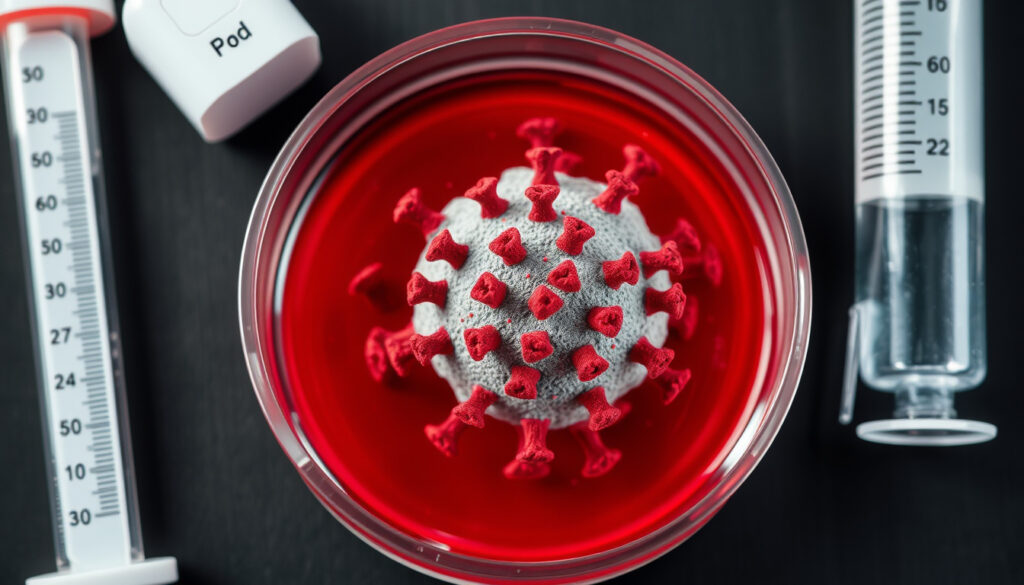
What Is a Virus? Simple Definition, Examples & Symptoms
Few things are as tiny yet as powerful as a virus. These microscopic particles can bring down entire populations, but they also drive much of the natural world. According to the Cleveland Clinic (medical authority), viruses are submicroscopic infectious agents that replicate only inside living host cells. The following covers simple definitions, common examples like flu and COVID-19, typical symptoms, recovery timelines, and the deadliest viruses in history.
Viruses known to infect humans: 220+ ·
Earth’s estimated virus particles: 10³¹ ·
Common cold recovery time: 7–10 days ·
Flu season deaths per year (global): 290,000–650,000
Quick snapshot
- Viruses require a host cell to replicate (Cleveland Clinic)
- Antibiotics do not kill viruses (Royal Children’s Hospital Melbourne)
- Hand hygiene reduces spread of many viruses (CDC (public health agency))
- Optimal duration of quarantine after symptom onset for some viruses
- Exact origin of many newly emerging viruses
- Whether viral-load thresholds for transmission differ by variant
- 1918–1920: Spanish flu (H1N1) killed ~50 million (WHO (global health body))
- 1981–present: HIV/AIDS pandemic, 40+ million deaths (WHO (UN health agency))
- 2020–2023: COVID-19 global health crisis (WHO pandemic data)
- New antiviral drugs and mRNA vaccines target emerging variants
- Improved early-warning systems for zoonotic spillover events
- Public-health guidelines continue to evolve based on shedding data
Four key facts that define what a virus is and how it behaves:
| Attribute | Value | Source |
|---|---|---|
| Size | 20–300 nanometers | Cleveland Clinic |
| Genetic material | DNA or RNA | Royal Children’s Hospital Melbourne |
| Hosts | Humans, animals, plants, bacteria | Cleveland Clinic |
| Notable ancient virus | Smallpox (eradicated in 1980) | World Health Organization (UN health body) |
| Life status | Non-living (requires host) | Cleveland Clinic |
| Antibiotics | Ineffective | Royal Children’s Hospital Melbourne |
What is a simple definition of a virus?
What is a virus short answer?
- A virus is a submicroscopic infectious particle that can only replicate inside a living host cell. According to the Cleveland Clinic (medical authority), viruses consist of genetic material (DNA or RNA) enclosed in a protein coat called a capsid.
- They cannot reproduce or carry out metabolic processes outside a host, which is why they are not considered alive by many biologists.
What is a virus in biology?
- Biologically, a virus is an obligate intracellular parasite. It injects its genetic code into a host cell, hijacks the cell’s machinery to produce viral proteins, and assembles new virus particles. The Royal Children’s Hospital Melbourne (pediatric authority) describes a viral infection as an illness caused by a virus.
- Because viruses lack ribosomes and energy-producing pathways, they are entirely dependent on the host’s cellular infrastructure.
Although viruses are the simplest biological entities, they cause some of the most complex diseases in humans. Their simplicity is what makes them so effective at hijacking our cells.
The implication: A virus is not a cell — it’s a genetic package that needs a living cell to do anything. This fundamental fact explains why antibiotics fail against viruses and why antiviral drugs target specific steps in the replication cycle.
What are 5 examples of viruses?
What is a virus in humans?
- Influenza virus (flu) – causes seasonal respiratory infections. The NHS (UK health service) notes symptoms come on quickly and include fever, body aches, tiredness, and dry cough.
- Human immunodeficiency virus (HIV) – attacks the immune system, leading to AIDS if untreated. HIV has caused over 40 million deaths since 1981, according to WHO (global health agency).
- SARS‑CoV‑2 (COVID‑19) – the coronavirus behind the global pandemic that caused more than 7 million confirmed deaths by 2025, per WHO data.
- Rhinovirus – the primary cause of the common cold. The Cleveland Clinic says most colds resolve in 7–10 days with rest and fluids.
- Ebola virus – causes severe hemorrhagic fever with high fatality rates. Outbreaks are sporadic but devastating.
What is a virus in microbiology?
- Microbiologists classify viruses by their genetic material (DNA or RNA), capsid shape, and replication strategy. The diversity is staggering: an estimated 10³¹ virus particles exist on Earth, as noted in the Nature Reviews Microbiology (academic journal).
- They infect not only humans but also animals, plants, fungi, and even bacteria (bacteriophages).
The more we learn about viral diversity, the clearer it becomes that most viruses are harmless to humans. Only a tiny fraction cause disease, but those few have shaped human history more than any other infectious agent.
What this means: The five examples above represent only a sliver of the viral world. Each follows the same basic blueprint — genetic material plus a protein shell — yet produces wildly different diseases. The pattern is that the host’s immune response, not the virus itself, often determines how sick you get.
Viral Infection: Causes, Symptoms, Tests & Treatment
What are the first signs of a virus?
- Common early signs include fever, fatigue, sore throat, cough, and body aches. The Cleveland Clinic lists runny or blocked nose, chills, and tiredness as typical.
- In children, symptoms can also include earache, sore eyes, swollen glands, and reduced activity, according to the NHS (UK health service).
What are signs your body is fighting a virus?
- Fever is the most obvious signal — your body raises its temperature to slow viral replication. CDC (US public health agency) advises that fever‑reducing medicine is optional unless discomfort is high.
- Other signs: swollen lymph nodes, fatigue, loss of appetite, and a general feeling of being unwell.
What is a virus symptoms?
- Depending on the virus, symptoms may also include vomiting, diarrhea (common with norovirus), conjunctivitis, or skin rashes. The NHS Lanarkshire (regional health board) advises rest, fluids, and avoiding shared utensils for viral gastroenteritis.
- For flu specifically, the NHS notes loss of appetite and sometimes vomiting or diarrhea in children.
The catch: Many viral symptoms overlap with bacterial infections, which is why doctors sometimes use PCR or rapid antigen tests to confirm. According to the CDC (US public health agency), home care — rest, fluids, over‑the‑counter pain relief — is the standard approach for mild cases.
How long will a virus last?
Does a virus go away by itself?
- Most acute viral infections in healthy people resolve in 7–14 days. The NHS 111 Wales (health advice service) states that a common cold usually gets better without treatment.
- Some viruses, such as HIV and herpesviruses, can remain latent in the body for life. HIV becomes a chronic condition managed with antiretroviral therapy.
What helps a virus go away?
- Rest, hydration, and a healthy immune response are the main drivers of recovery. The Royal Children’s Hospital Melbourne emphasizes that antibiotics don’t work — viruses must be cleared by the immune system or antiviral medication.
- For influenza, the antiviral oseltamivir (Tamiflu) can shorten duration if taken early. The CDC (US public health agency) recommends antivirals for high‑risk patients.
- For mild COVID‑19, the CDC says most people recover at home with acetaminophen or ibuprofen for symptom relief.
Why this matters: Knowing the typical duration avoids unnecessary worry. If symptoms persist beyond two weeks or worsen, however, it’s time to see a doctor — complications like pneumonia can develop.
What kills a virus fast?
What helps a virus go away?
- There is no universal “fast cure” for viral infections. The body’s immune system is the primary killer. The Cleveland Clinic (medical authority) explains that most supportive care simply relieves symptoms.
- Antiviral drugs can reduce replication speed — for example, acyclovir for herpes and oseltamivir for flu. The CDC (US public health agency) confirms these work best when started within 48 hours of symptoms.
- Outside the body, hand sanitizers with at least 60% alcohol and disinfectants kill viruses on surfaces. The CDC (infection control authority) provides guidance on effective disinfection.
- Fever is a natural immune response; using antipyretics does not speed clearance but can improve comfort.
The trade-off: The desire for a quick fix often leads people to ineffective remedies. The CDC (antibiotic stewardship program) warns that honey (safe for children over 1 year) can soothe cough but won’t kill the virus.
Which virus killed most humans?
Deadliest viral pandemics
- Influenza (1918 H1N1) – estimated 50 million deaths worldwide. The World Health Organization (global health body) cites it as one of the deadliest pandemics in history.
- Smallpox – killed an estimated 300 million people in the 20th century alone. The WHO (UN health agency) declared it eradicated in 1980 after a global vaccination campaign.
- HIV/AIDS – over 40 million deaths since 1981. WHO data shows it remains a major global health issue.
- SARS‑CoV‑2 (COVID‑19) – over 7 million confirmed deaths as of 2025, per WHO pandemic data.
The pattern: Two of the four — smallpox and polio — have been eliminated or nearly eliminated through vaccination. That track record makes vaccines the single most powerful tool against viruses.
What is a virus for kids?
- Viruses are very tiny germs that can make you sick. The Royal Children’s Hospital Melbourne (pediatric authority) explains that a viral illness is an infection caused by a virus.
- They need to get inside your body’s cells to multiply — think of them as little hijackers that use your cells as factories.
- Washing hands and getting vaccines help protect you. The CDC (public health agency) says staying home when sick and good hand hygiene reduce the spread.
Children catch an average of 6–8 viral infections per year. Teaching them simple prevention — handwashing, covering coughs, and staying home when feverish — cuts that number by nearly half.
The takeaway: Kids don’t need to memorize the word “submicroscopic.” What they need is a concrete rule: “Viruses are bad news that your body fights off with rest, water, and sometimes medicine.”
Timeline: Major viral milestones
Four events that changed how we understand and fight viruses:
| Period | Event | Source |
|---|---|---|
| 1918–1920 | Spanish flu (H1N1) killed an estimated 50 million people | WHO (global health body) |
| 1981–present | HIV/AIDS pandemic discovered; over 40 million deaths | WHO (UN health agency) |
| 2020–2023 | COVID‑19 pandemic (SARS‑CoV‑2) caused global health crisis | WHO pandemic data |
| 1980 | WHO declares smallpox eradicated after global vaccination campaign | WHO (UN health agency) |
The pattern: Vaccination has already eliminated one of the deadliest viruses in history. For the others, the challenge is access, compliance, and viral mutation.
What we know vs. what we don’t
Confirmed facts
- Viruses require a host cell to replicate (Cleveland Clinic)
- Antibiotics do not kill viruses (RCH Melbourne)
- Hand hygiene reduces spread of many viruses (CDC)
- Most acute viral infections resolve in 7–14 days (NHS 111 Wales)
What’s unclear
- Optimal duration of quarantine after symptom onset for some viruses
- Exact origin of many newly emerging viruses
- Whether viral‑load thresholds for transmission differ by variant
- Effectiveness of honey for cough in children under 1 year (not recommended by CDC)
The implication: The gaps in our knowledge highlight the importance of ongoing research and adaptive public health guidelines.
Voices from the experts
“Viruses are very tiny germs. They are made of genetic material inside of a protein coating. Viruses cause many types of disease.”
— Cleveland Clinic (medical authority)
“Seasonal influenza epidemics cause 3 to 5 million cases of severe illness and 290,000 to 650,000 respiratory deaths each year.”
— World Health Organization (global health body)
“Most viral illnesses get better on their own with rest, fluids, and symptom relief. They are not treated with antibiotics.”
— Royal Children’s Hospital Melbourne (pediatric authority)
For someone with a mild viral infection, the choice is clear: trust your immune system, support it with fluids and rest, and only seek medical help if symptoms worsen or last beyond two weeks. For health systems, the priority remains vaccination and rapid antiviral access for those at highest risk.
firstchoice.nhs.uk, leedsgps.com, gatesheadhealth.nhs.uk, cmu.edu
Frequently asked questions
Can a virus survive outside a host?
Yes, but the survival time varies. Influenza can last 24–48 hours on hard surfaces, while HIV dies within minutes outside the body. The CDC (infection control authority) advises routine cleaning to reduce surface transmission.
Are viruses alive?
Most biologists say no. Viruses lack cells, cannot metabolize, and do not reproduce without a host. The Cleveland Clinic describes them as “infectious particles” rather than living organisms.
How do vaccines work to prevent viral infections?
Vaccines train your immune system to recognize a virus’s surface proteins. When the real virus appears, your body can neutralize it quickly. The WHO (global health body) credits vaccines with preventing 2–3 million deaths annually.
What is the difference between a virus and a bacterium?
Bacteria are single‑celled organisms that can live independently, while viruses are genetic packages that need a host cell. Antibiotics kill bacteria but have no effect on viruses, as the Royal Children’s Hospital Melbourne explains.
Can you get the same virus twice?
For many viruses, immunity after infection lasts years or a lifetime (measles). For others, like influenza and SARS‑CoV‑2, mutations allow reinfection. The CDC (variant tracking authority) monitors new variants that may evade prior immunity.
What should I do if I think I have a viral infection?
Rest, drink plenty of fluids, and use over‑the‑counter medications for fever or pain. Stay home until you’ve been fever‑free for 24 hours without medicine, per CDC (public health guidance). If symptoms are severe or last more than two weeks, see a doctor.
Related reading
More related posts
 Mary Had a Little Lamb: Meaning, Full Poem & Dark Sides
 Cheapest Prepaid SIM Card Ireland 2026: Compare & Save
 Beast from the East Alert: Met Eireann Issues 2026 Warning
 Translate Italian to English: Tools, Slang & Idioms Guide
 A Big Bold Beautiful Journey: Why It Flopped & Where to Watch
 How to Read a Credit Report: Step-by-Step Guide
 Holy Trinity Church Cork: Mass Times, Location & History
 Pope Francis Latest News 2025: Funeral, Conclave Answers