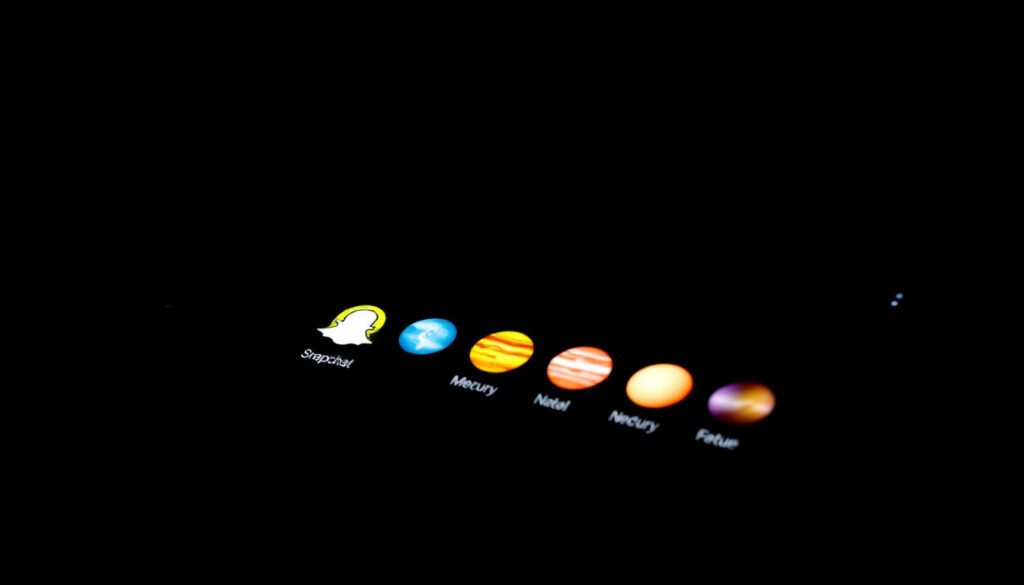
Snapchat Planets Order Best Friends: Complete List
Ever spotted a little planet badge next to a friend’s name on Snapchat and wondered what it means? That’s the Friend Solar System feature, a playful way to visualize your closest connections. In this guide, we’ll walk through the official Snapchat planets order for best friends, how the ranking works, and just how accurate those planet labels really are.
Planets in Snapchat Solar System: 8 ·
Closest friend planet: Mercury ·
Farthest friend planet: Neptune ·
Friends required for Solar System: 8+ best friends
Quick snapshot
- Planet order: Mercury, Venus, Earth, Mars, Jupiter, Saturn, Uranus, Neptune (Snapchat Help Center)
- Mercury is the #1 best friend (Digital Trends)
- Feature requires 8 best friends (Snapchat Help Center)
- Planet badge visible on friend profile (Beebom)
- Exact algorithm for interaction scoring (YouTube explainer)
- Weight of snaps vs chats in ranking (Planets of Snapchat)
- Update frequency of planet positions (Beebom)
- Feature launched in 2022 (reportedly June 2022) (Snapchatplanetts.com)
- Snapchat Help Center page updated 2026-07-21 (Snapchat Help Center)
- Planet order may shift as interaction patterns change (wikiHow)
- Feature remains exclusive to Snapchat+ subscribers (Digital Trends)
| Label | Value |
|---|---|
| Feature name | Friend Solar Systems |
| Number of planets | 8 |
| Number 1 planet | Mercury |
| Number 8 planet | Neptune |
| Minimum friends needed | 8 best friends |
| Official source | Snapchat Support help page |
What is Snapchat Friend Solar System?
Snapchat’s Friend Solar System is a visual feature that maps your eight best friends to the eight planets in our solar system. According to the Snapchat Help Center (official support documentation), tapping the planet badge on a friendship profile shows which planet you are in that friend’s Solar System, and each planet represents a different position in the friend’s Best Friends list.
How do Friend Solar Systems work according to Snapchat support?
- The feature appears when you have at least eight best friends on your list (Snapchat Help Center).
- Each planet corresponds to a rank in the Best Friends list, with Mercury being the closest friend and Neptune the farthest (Digital Trends (tech news outlet)).
- The system is private – only you can see your own Solar System (YouTube explainer).
Snapchat+ subscribers get the Friend Solar System, but it’s not turned on by default – you may need to enable it manually in settings (Digital Trends).
The implication: This isn’t a separate ranking system; it’s the same Best Friends list, just dressed up as planets. The order updates in real time as your snap and chat activity shifts.
Which planet is #1 on Snapchat?
Mercury holds the top spot. Out of the eight planets, Mercury is the closest to the sun – and in Snapchat terms, it’s the closest friend. The Snapchat Help Center (company support page) confirms the order: Mercury, Venus, Earth, Mars, Jupiter, Saturn, Uranus, Neptune.
What does Mercury mean on Snapchat best friends?
- Mercury is the #1 planet, representing the person you interact with most frequently (Digital Trends).
- It corresponds to the highest volume of snaps, chats, and possibly streaks (Beebom (tech website)).
- If you’re Mercury for someone, you’re their #1 best friend on Snapchat (wikiHow (practical guides)).
Your Mercury status isn’t permanent – if you stop snapping regularly, you could drop to Venus or even farther. The planet shifts with your engagement.
The pattern: Mercury is the prize, but it’s a dynamic ranking. No one stays #1 forever without consistent interaction.
What do the planets mean on Snapchat best friends?
Each planet maps to a specific position in the Best Friends list. Here is the complete mapping, confirmed by Snapchat’s own support page and corroborated by multiple independent sources.
Eight planets, one clear order: Mercury (#1), Venus (#2), Earth (#3), Mars (#4), Jupiter (#5), Saturn (#6), Uranus (#7), Neptune (#8).
| Planet | Rank | Meaning |
|---|---|---|
| Mercury | 1 | Closest best friend, highest interaction |
| Venus | 2 | Second closest friend |
| Earth | 3 | Third closest friend |
| Mars | 4 | Fourth closest friend |
| Jupiter | 5 | Fifth closest friend |
| Saturn | 6 | Sixth closest friend |
| Uranus | 7 | Seventh closest friend |
| Neptune | 8 | Farthest best friend in the system |
What does Saturn mean on Snapchat?
- Saturn indicates the sixth closest best friend position (Beebom).
- It’s the middle of the pack – not the closest, but still in the top eight (Digital Trends).
What does Uranus mean on Snapchat?
- Uranus is the seventh position, one step from the bottom (wikiHow).
- It suggests moderate interaction – enough to stay in the top eight, but not among the top five (Planets of Snapchat).
The trade-off: The farther down the list you go (Neptune), the less frequent your interactions likely are. But being on the Solar System at all means you’re in the top eight – that’s still a close friend.
How accurate are Snapchat planets?
Accuracy depends on how consistently you and your friend interact. Snapchat’s official support page doesn’t publish the exact algorithm, but third-party sources provide clues.
How accurate is Snapchat Best Friends planets list?
- Rankings are based on recent snap and chat activity, including streaks and story views (YouTube explainer).
- Snapchat reportedly updates the planet order in real time as interaction patterns change (Beebom).
- The system is a visual representation of the existing Best Friends ranking, not a new metric (Planets of Snapchat).
Because the algorithm is opaque, the planet you see today might not reflect a long-term friendship – it’s a snapshot of recent activity. Don’t read too much into a single planet shift.
The pattern: The planets are accurate for recent interaction, but they can’t measure deep friendship. A close friend you haven’t snapped in a week might drop to Neptune or fall off the list entirely.
How does the best friends list work on Snapchat planets?
The Friend Solar System is essentially a visual layer on top of the existing Best Friends list. To see where you stand in someone’s system, you need to tap the planet badge on their profile.
How do I know if I am someone’s #1 on Snap?
- Open the chat with the friend you’re curious about.
- Look for the gold ring badge on their profile – this indicates a Best Friends connection (Digital Trends).
- Tap the badge to see which planet you are in their Solar System. If you’re Mercury, you’re #1 (Snapchat Help Center).
- Note that both you and your friend must have Snapchat+ for the feature to appear (Beebom).
The catch: The planet you see is only visible to you – your friend can’t see your planet view unless you share it. And the ranking changes with every snap.
Confirmed facts vs. what’s unclear
Confirmed facts
- Planet order: Mercury, Venus, Earth, Mars, Jupiter, Saturn, Uranus, Neptune (Snapchat Help Center)
- Mercury is #1 best friend (Digital Trends)
- Feature requires 8 best friends (Snapchat Help Center)
- Planet badge appears on friend profile (Beebom)
- Feature is part of Snapchat+ (Digital Trends)
What’s unclear
- Exact algorithm for interaction scoring – reportedly uses snaps, chats, streaks, and story views, but weights are unknown (YouTube)
- Whether snaps or chats carry more weight in ranking (Planets of Snapchat)
- How often planet positions update – real-time is assumed but not confirmed (Beebom)
Quotes from the experts
“Tapping the badge on a friendship profile shows which planet you are in that friend’s Solar System. Each planet represents a different position in the friend’s Best Friends list.”
— Snapchat Help Center (official support documentation)
“Mercury is the person you share the most streaks with, while Neptune is the friend you interact with the least among your top eight.”
— Beebom (technology news and guides)
“The planet system is a visual representation of Snapchat’s existing Best Friends ranking system, not a separate ranking.”
— Planets of Snapchat (community guide)
The takeaway: Snapchat’s own support page is the most authoritative source, but third-party explainers add useful context about how the feature is used in practice.
Summary
Snapchat’s Friend Solar System turns your top eight friends into a planetary map, with Mercury as the #1 spot and Neptune as the farthest. The order is based on real-time interaction, but the exact formula remains a black box. For anyone who wants to know where they stand, tapping the planet badge is the only way in – and the answer can change with every snap. For power users who rely on streaks, the message is clear: keep snapping, or watch your planet drift toward Neptune.
snappalnetsy.org, irelandheadline.com, snapchat-planets.org, youtube.com
Frequently asked questions
Can I remove myself from someone’s Solar System?
No, you cannot remove yourself. The system is automatic based on interaction. If you want to drop off, you’d need to reduce your snap and chat activity with that person.
Does blocking someone affect planet ranking?
Yes, blocking someone removes them from your friends list entirely, so they will no longer appear in your Solar System.
Can I see my own planet in someone else’s system?
Yes, by tapping the planet badge on their profile you can see which planet you are in their system.
Will the planet change if we stop snapping?
Yes, a drop in interaction will likely move you to a lower planet (farther from the sun).
Is the Solar System visible to all Snapchat friends?
No, only you can see your own Solar System. It’s private.
Do group chats affect planet rankings?
Group chats are not directly mentioned, but since the ranking is based on individual interactions, group chats may not count as strongly as direct snaps.
How often does the planet order update?
Snapchat does not specify an update frequency, but evidence suggests it adjusts in real time as activity changes.
More related posts
 Emsella Treatment Cost Near Me: Irish Prices for 2025
 How Many Calories in a Glass of White Wine? Complete Guide
 Slot Gacor Fujiwin88: Verified Facts, Claims & User Questions
 Is Lucy Letby Still in Prison? 2026 Full Status Update
 Leeds United vs Aston Villa – 1-1 Draw Report and Stats
 Real Techniques Brush Set – Reviews and Buying Guide
 Bord Gáis Phone Number: Official Contact Numbers & Opening Hours
 Cliffs of Moher Parking: Costs, Free Options & Walk