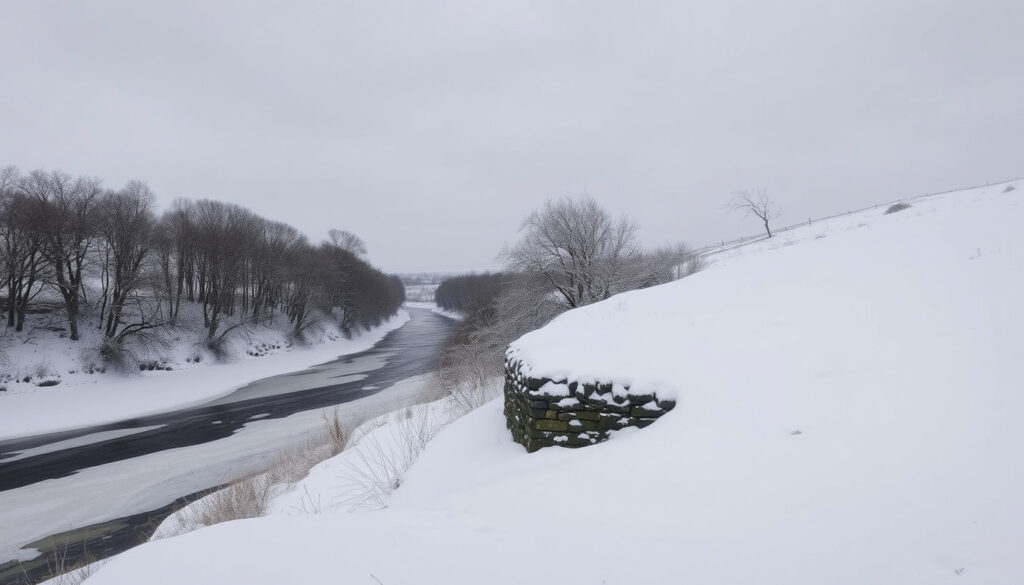
Beast from the East 2018: Timeline and Impact in Ireland & UK
If you were in Ireland during the last week of February 2018, chances are you still remember the snow piling up and the country grinding to a halt. That cold spell – popularly called the Beast from the East – brought the worst snowfall in Ireland since 1982 and officially lasted 12 days.
Start date: 22 February 2018 ·
End date: 5 March 2018 ·
Duration: 12 days ·
Worst snowstorm in Ireland since: 1982 ·
Meteorological name: Anticyclone Hartmut ·
Associated storm in Ireland: Storm Emma
Quick snapshot
- Cold wave began 22 February 2018 and lasted until 5 March 2018 (Met Éireann (Ireland’s national meteorological service)).
- Storm Emma hit Ireland on 1–2 March 2018, bringing heaviest snowfall (Met Éireann).
- This was the worst snowstorm in Ireland since 1982 (University College Cork (climate research unit)).
- Exact total snowfall amounts across all regions vary by source (British Isles Climate analysis (weather blog)).
- Whether the combination of Beast from the East and Storm Emma should be treated as one event or two separate systems remains a matter of definition (University College Cork).
- Peak snowfall occurred 1–2 March 2018 when Storm Emma collided with the cold airmass (Met Éireann).
- Status Red warnings were issued for the first time since 2015 (Government of Ireland (official emergency information)).
- Meteorologists continue to study how Arctic airmasses interact with Atlantic storms to improve future warnings (University College Cork).
Six key facts at a glance show the scale of the event:
| Fact | Detail |
|---|---|
| Official Start Date | 22 February 2018 (Met Éireann) |
| Official End Date | 5 March 2018 (Met Éireann) |
| Peak Snowfall (Ireland) | 1–2 March 2018 (Storm Emma) (Met Éireann) |
| Record Low Temperature (Ireland) | -10°C (multiple stations) (University College Cork) |
| Fatalities (Ireland) | 3 (Government of Ireland) |
| UK Fatalities | 17 (Wikipedia (open encyclopedia)) |
The implication: the Beast from the East was not a single storm but a prolonged cold snap that, when combined with Storm Emma, produced deadly conditions on both sides of the Irish Sea.
When was the Beast from the East in Ireland?
The Beast from the East began on 22 February 2018 and lasted until early March 2018, according to Met Éireann (Ireland’s national meteorological service). The UK Met Office officially named the high-pressure system behind it Anticyclone Hartmut. The cold spell was already under way when a low-pressure system named Storm Emma by Met Éireann arrived on 1–2 March 2018, dumping heavy snow across Ireland.
The Irish public and media quickly adopted the phrase “Beast from the East,” though the official meteorological term for the broader event is the 2018 British Isles cold wave (University College Cork (climate research unit)).
Because Storm Emma and the Beast from the East are often used interchangeably, but only the cold airmass from Siberia was the “Beast” – Storm Emma was the Atlantic low that turned that dry cold into blizzard conditions.
The pattern: official naming by two different agencies created confusion, but both agree that the worst of the snow in Ireland fell on 1–2 March 2018.
How long did the 2018 Beast from the East last?
Exact start and end dates given by Met Éireann and UK Met Office
- Start: 22 February 2018 – cold air from Siberia began moving westwards (University College Cork).
- End: 5 March 2018 – conditions gradually improved (Met Éireann).
Duration in days and key phases
- The cold wave lasted approximately 12 days.
- First significant snow in Ireland: around 27 February 2018 in eastern and southeastern areas (Met Éireann).
- Most intense snowfall: 1–2 March 2018 during Storm Emma, with Status Red warnings in effect (Government of Ireland (official emergency information)).
- Temperatures dropped to -5°C to -10°C across many parts of Ireland and the UK (University College Cork).
The trade-off: a long cold spell with a short, violent peak – the definition of a compound weather event.
How did the Beast from the East happen in Ireland?
Meteorological origins: cold air from Siberia
A high-pressure system parked over Scandinavia directed cold, dry air from Siberia westward across Europe, according to University College Cork (climate research unit). This easterly airflow is what meteorologists call a “Beast from the East” – the airmass originates from the Eurasian continent.
Role of high-pressure system over Scandinavia
- The high-pressure system – Anticyclone Hartmut – blocked milder Atlantic air from reaching the British Isles (Wikipedia (open encyclopedia)).
- This allowed temperatures to fall well below average for late February.
Interaction with Storm Emma
When the cold easterly air met warmer, moist air from the Atlantic (the low-pressure system Storm Emma), it produced heavy snowfall and blizzard conditions (University College Cork). Strong winds blowing the snow reduced visibility to near zero in places.
Without the Atlantic moisture, the Beast from the East would have been merely a cold snap. It was the clash of airmasses that turned it into a historic snow event.
The takeaway: Ireland’s geography at the western edge of Europe makes it vulnerable when Siberian cold and Atlantic lows collide.
Beast from the East: Extreme weather in the UK and Ireland
Comparison of impact on Ireland vs. UK
The UK saw similar extreme cold and snow, with some areas recording over 50 cm of snow (Wikipedia (open encyclopedia)). However, the combination with Storm Emma made the situation particularly severe for Ireland.
Schools and transport closures
- All schools in Ireland were closed on 1–2 March 2018 (Government of Ireland (official emergency information)).
- Roads, rail, and air travel were severely disrupted; Dublin Airport cancelled dozens of flights.
- The snow event was especially severe in Leinster and Munster, where red warnings and major transport disruption were reported (Stratford College (education institution)).
Casualties and disruptions
At least 3 fatalities were reported in Ireland and 17 in the UK (Government of Ireland; Wikipedia). Hundreds of motorists were stranded overnight, and emergency services mounted large-scale rescues.
Met Éireann later described the episode as “one of the most significant snowfalls to affect Ireland in recent decades.”
Met Éireann
The UK Met Office noted that Anticyclone Hartmut “directed cold air from Siberia across Europe, bringing snow and ice to many parts of the UK.”
UK Met Office (via Wikipedia)
The pattern: the Beast from the East was a shared event, but Ireland’s experience was uniquely defined by the timing of Storm Emma.
Timeline: Beast from the East and Storm Emma
- 22 February 2018 – Cold air from Siberia begins moving westwards; start of the Beast from the East (University College Cork).
- 25–27 February 2018 – Temperatures drop sharply across Ireland and UK; widespread snow begins (Met Éireann).
- 1–2 March 2018 – Storm Emma arrives in Ireland; Status Red warning; heaviest snowfall and blizzard conditions (Met Éireann; Government of Ireland).
- 3–5 March 2018 – Conditions gradually improve; snow melts (Met Éireann).
What we know and what remains unclear
Confirmed facts
- Beast from the East began 22 February 2018 (Met Éireann).
- Storm Emma hit Ireland 1–2 March 2018 (Met Éireann).
- Worst snowstorm in Ireland since 1982 (University College Cork).
What’s unclear
- Exact total snowfall amounts across all regions vary by source (British Isles Climate analysis blog).
- Whether the Beast from the East and Storm Emma constitute a single event or two separate events (University College Cork).
For residents and local authorities in Ireland, the lesson from 2018 is clear: prepare for multi-day snow events even in a typically mild climate, or face severe disruption.
Related reading: Moderate Snow Ice Warning – Meaning, Impacts and Preparation · Weather in Waterford 10 Days – Met Éireann Forecast
youtube.com, rmets.onlinelibrary.wiley.com, frenchiesandrose.com
Meteorologists later compared the event’s severity to the detailed timeline of the 2018 cold spell, which remains a benchmark for extreme winter weather in the region.
Frequently asked questions
What caused the Beast from the East in 2018?
The Beast from the East was caused by a high-pressure system over Scandinavia that directed cold, dry air from Siberia westward across Europe. When this air met milder, moist Atlantic air (Storm Emma), it produced heavy snowfall.
Was the Beast from the East the same as Storm Emma?
No. The Beast from the East refers to the cold airmass from Siberia. Storm Emma was the Atlantic low-pressure system that interacted with that cold air, causing intense snowfall over Ireland. The two terms are often used together but are distinct weather systems.
How much snow fell during the Beast from the East in Ireland?
Snowfall totals varied widely by location. Some areas in Leinster and Munster reported drifts over 1 metre, but exact official measurements are inconsistent. Met Éireann described it as one of the most significant snowfalls in decades.
Which areas of Ireland were most affected by the Beast from the East?
Leinster and Munster were hit hardest, especially counties Wicklow, Dublin, Cork, and Wexford. Status Red warnings were issued for those regions, and transport was completely disrupted.
Did the Beast from the East cause any deaths in Ireland?
Yes, at least 3 fatalities were reported in Ireland, along with 17 in the UK.
How does the Beast from the East compare to the Night of the Big Wind?
The Night of the Big Wind (1839) was a hurricane-force storm, while the Beast from the East was a prolonged cold spell with snow. Both are among Ireland’s most extreme weather events, but they are very different in nature.
Is the Beast from the East related to climate change?
Meteorologists continue to study whether Arctic amplification – a warming Arctic – leads to more frequent cold-air outbreaks in mid-latitudes. The relationship is an active area of research.
More related posts
 His and Hers Cast – Full Netflix Actors and Characters Guide
 What Is the Best Way to Wake Up? Science-Backed Morning Tips
 Man City 115 Charges: Full Breakdown and Updates
 Volvo XC90 for Sale Ireland: Best Years, Prices & Problems
 VHI Procedure Codes List: Coverage and Codes Guide
 Cast of The Bear: Real-Life Relationships & Mental Health
 St. Andrew’s Church Dublin: Active Parish & Historic Landmark
 Tree of Life Meaning: Celtic, Biblical, Islamic & Hindu Symbolism